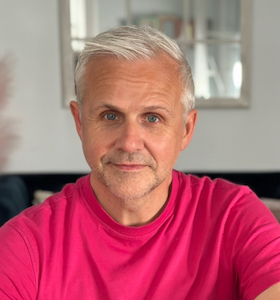
Cassandra Vieten, PhD – Director of Research, Arthur C. Clarke Center for Human Imagination
Adapted from Imagine That: Transform How You Think, Feel, and Live with the Science of Imagination
Here is what you’ll learn in this article:
For anyone who senses their inner world has quietly shrunk, this piece from imagination researcher Cassi Vieten shows that imagination isn’t make-believe – it’s a doorway to wisdom you can’t reach any other way.
- The Great Flattening – Multiple-choice exams, two-sided news, endless screens: our imaginal worlds are narrowing, and it’s costing us more than creativity. Discover why “diseases of disenchantment” may sit beneath so much modern despair.
- Why You Can’t Think Your Way In – The deepest wisdom in you doesn’t speak the language of linear, analytic thought. Learn why your own ego works so hard to keep you where you are – and how humans have spent millennia developing ways around it.
- Active Imagination as a Living Dialogue – Meet the Protector on the castle rampart and the future self in the adobe house. Through real, vivid stories, see how conscious conversation with your inner world can reshape a life and a major decision.
- A Practice You Can Start With Your Eyes Closed – You don’t need a shaman or a desert mesa. Discover the simple exercise for opening a conversation with the deeper intelligence inside you – and why even a paperclip might have something to say.

Hi my name is Cassadra but you can call me Cassi. I spend my working life studying imagination as a science. At UC San Diego’s Arthur C. Clarke Center for Human Imagination, my colleagues and I map how imagination works in the brain and the body: its three domains (cognitive-narrative, sensory-motor, and social-emotional), its extraordinary neurodiversity, and the fact that people vary enormously in how they imagine, from those who experience no mental imagery at all to those whose inner worlds are almost overwhelmingly vivid. Imagination, in the way we define it, is not make-believe. It’s the capacity to represent what is not present to the senses, to escape the boundaries of what is and begin to inhabit what could be. It’s how we simulate futures, rehearse conversations, take another person’s perspective, and find our way to solutions that don’t yet exist.
There is good reason to care about this right now. My colleague Dr. Lisa Miller writes about the “diseases of despair” such as anxiety, depression, addiction, and loneliness, I’ve added a companion phrase the “diseases of disenchantment.” Our imaginal worlds are narrowing. Multiple choice exams teach us there are four possibilities and one right answer. The news offers two sides to every dilemma. The screens we spend so much time with crowd out our capacity to come up with our own ideas. I call this the Great Flattening, and it matters physiologically as well as spiritually. The word enchanted has two meanings: to be under a spell, and the other is to be delighted, utterly captivated, to be awake to the magic in the ordinary and the extraordinary. It’s the latter that’s too often missing.
On a recent trip to the Anza-Borrego Desert, I was hiking a long canyon up to a high windswept mesa, cholla cactus, otherworldly ocotillo, carpets of yellow, purple, pink, and white wildflowers, hummingbirds swooping and a 360-degree view that went for miles. As I sat down I asked the spirits that seemed very present there, “What do people in this world need to know about imagination?” Almost immediately, I heard faintly from within: “Tell them the imagination is the place we can most easily talk to them.”
Your imagination is here to help you simulate the future, improve your health, make better decisions, build relationships, innovate solutions. All true. But perhaps most importantly, your imagination is here to re-enchant your life and our world, to break you free from the programming and conditioning that restrict what feels possible, and to bring back whimsy, play, wonder, awe, mystery, and the wide range of potentials that uncertainty brings.
Trauma clinician Deb Dana coined the term “glimmers” for the small moments that cue our nervous system toward safety and calm, the opposite of triggers. A kindness. A hummingbird hovering in front of you, flashing its pocket of brilliant color. Here’s what I find hopeful: glimmers can also be imagined, and practiced. Like a prism hung in a window that surprises you every time it throws a rainbow on the wall, the way you habitually imagine your life can become a prism that scatters glimmers across your days.
If you’re drawn to the idea that there’s wisdom in the depths of you that you can reach through imagination, there’s one problem: you usually can’t get there with your ordinary mind. You can’t talk your way in, figure it out, or think it through. Imagination is a different territory, and it doesn’t speak the language of linear, analytic thought: often it doesn’t want words at all. Ego development psychologist Susan Cook-Greuter describes how language divides lived experience into separate objects with tidy boundaries, and how it “lures us into a false sense of knowledge.” She also names the deeper obstacle: “Our ego labors mightily to create and maintain meaning,” defending hard against anything dissonant. We are built to protect the status quo, even when disruption would be the best thing for us. Which is exactly why humans have spent thousands of years developing practices for transformation: dreamwork, vision quests, shamanic journeying, meditation, hypnosis, guided visualization, active imagination, drumming, dancing, fasting. Most of them share a few features, 1) attentional training to keep the mind steady while adventuring, 2) a clear intention, 3) some tools or rituals, and 4) guidance from others and a community of support. When you come down to it, most of the world’s religions are exercises in the profound and sacred imagination.
Just as some animals live in only one lake or on one island, and some minerals come from a single mine, there is a source of wisdom available only through imagination. Freud called dreams the “royal road to the unconscious,” but he mostly used imagination to root out what he considered pathological. His onetime protégé and critic Carl Jung went further, agreeing with mystics and Indigenous peoples that alongside material reality there is a psychic reality holding information essential to our growth. Jung didn’t mean psyche as in “mind,” as it’s typically been translated. He used the word psyche as it was conceived by the Greeks, to mean breath, soul, life force: the intangible essence that makes a body alive and leaves it at death.
He treated the psyche not as machinery but as a living system, an inner cosmos, dynamic and always striving toward wholeness. His method for entering it was active imagination: conscious dialogue with the unconscious. It’s a kind of waking dream you’re aware of as it happens, one you can move around inside and talk with. But since you are doing it on purpose it is more intentional and relational than a dream. You might return to a figure from last night’s dream and ask what she wants. You might follow a symbol that keeps showing up in your life. For a while I saw gryphons everywhere, on logos, on the sides of trucks, on stickers. When I did some inner work using active imagination with the gryphon, and some research on its mythology, I discovered it was a powerful ally to help me access the wisdom of spirit while keeping my feet on the ground, and standing in my power.
I learned how real this can feel at seventeen, in therapy for struggles with mood, thinking, and substance use. My therapist guided me into a landscape where I might meet a part of myself I hadn’t met yet. What came was immediate and vivid: an Arthurian castle with a moat and a drawbridge. I crossed, the bridge slammed shut behind me, and I climbed a spiral staircase to the rampart, where a woman in full armor stood scanning the horizon, laser-focused, hypervigilant. I asked who she was. “The Protector,” she said. I asked what her job was. “I’m here to make sure nothing, and no one, gets in.” I understood her instantly. She was the part of me built from mistrust and fear, keeping me safe by keeping everyone out. When I asked what would happen if I wanted to let someone in, she didn’t budge: those were her orders. My therapist had me draw her, then journal with her, not about her. I’ve never tried to get rid of her, and I wouldn’t; she served a purpose. But over the years I’ve let her know it’s okay to lower the drawbridge, and that letting people in might protect me better than keeping them out. That practice softened how I move through the world, and it shaped my healing and my recovery.
Years later, on a women’s retreat, a friend guided five of us through a visualization in which we floated up out of our bodies, arced around a distant star like a slow celestial boomerang, and returned to Earth ten years in the future. I landed in a golden desert dotted with juniper, cedar, and piñon, northern New Mexico, a place that has felt sacred to me since I was twenty-one. There was a low adobe house nestled into the land as though it had always been there, and I knew my future self was inside. When she opened the door, she had gray curly hair, crow’s feet, sun across her nose, and a grounded warmth that made me feel instantly safe. I can still feel the coolness of those walls and the Saltillo tile under my bare feet. Fifteen years later, in the middle of a decision about where to live, I lost a bidding war on a Southern California house and felt not defeat but relief. I flew to New Mexico, and within three months I’d bought a house that looked almost exactly like the landscape from that journey. I’m still working on it, but something in me has settled. The choice was not strategic, but I knew it was right, because I’d already sat across from the woman who had lived it, and I listened.
None of this is new, and it isn’t only personal. Each morning around 3 or 4 a.m., the Achuar people of the Amazon gather as families around a fire for a ritual called wayusa: they drink an emetic tea, cleanse body and mind, and then share and interpret their dreams. Dreams carry messages from spiritual forces, including the rainforest spirit Arutam, guidance for healing, for daily decisions, even for where to find medicinal plants and how to use them. Rather than experiencing nature as separate, the Achuar understand themselves as part of an intelligent, symbolic, living world, and they often treat dream life as more trustworthy than waking life. When they hit a problem, they dream on it. I first learned about them through one of my most valued mentors, the pioneering consciousness researcher Dr. Marilyn Schlitz, a medical anthropologist who studies how health and illness are embedded in culture, belief, and practice as much as biology.
The Achuar are far from alone. For millennia, people have travelled into other layers of reality to seek guidance, bring back ideas, commune with the divine, and heal. In many Native American, Indian, and First Nations traditions, practitioners journey to a Lower World of instinct, animal wisdom, and ancestral memory; a Middle World of relationships and the energetic patterns of daily life; and an Upper World of guides, teachers, and vision. A shaman might travel to a bird’s-eye view to see whether there is game to hunt or enemies approaching, or perceive a spiritual injury in someone’s body and act in the spirit world to address it. Tibetan Buddhist practitioners hold sacred images in painstakingly sharp focus as a way of honing attention and connecting with the divine.
Dr. Lewis Mehl-Madrona, whose narrative healing work uses art, dance, puppets, improvisation, toys, and whatever else fits the person, along with ideas about parallel worlds, past and future lives, and the presence of ancestors, puts it plainly: “It isn’t necessary to believe in spirits to work in this way.” These approaches can equally be understood as ways of accessing intuition, and they help people change by making the world feel less finite.
You don’t need a retreat, a shaman, or a desert mesa to begin. Close your eyes. Let an image arise, an animal, a feeling in your belly, a waterfall, a tree, a sword, a paperclip. If nothing comes, make something up. Breathe more slowly, exhale more fully than usual, soften the muscles around your eyes and neck, and drift somewhere between analytical and asleep. Then ask: Who are you? Why have you shown up? What do you want me to know right now? What do you need from me? Don’t try to decode it, and don’t worry if the answers make no sense. Just let the conversation happen, bow to whatever showed up, and write it down, draw it, or speak it into a voice note. The point isn’t interpretation; it’s building a relationship between your conscious self and the deeper intelligence of your inner world. You might be surprised what a paperclip has to say.
This post is adapted from Imagine That: Transform How You Think, Feel, and Live with the Science of Imagination (Simon Element), with a foreword by Pete Docter. Available wherever books are sold. Take this short online course on Imagination with Cassi on Be an Imaginaut! Take the UCSD Clarke Center for Human Imagination online survey and get your own Imagination Profile to learn what kind of imaginer you are. https://ucsd.co1.qualtrics.com/jfe/form/SV_1LCcy8eaGvGkamW
Buy the book! Imagine That | Book by Cassandra Vieten, Pete Docter | Official Publisher Page | Simon & Schuster
Reflect on this week’s blog and try the simple practice for yourself: close your eyes, let an image arise, and ask it what it wants you to know. Notice where your imagination has quietly narrowed, and where wonder still breaks through. Be the imaginaut and see what shows up!
If there’s anything you’d like our blogs to discuss, write to us through our website – we’d love to hear from you.
The Conference for Consciousness and Human Evolution – bridging ancient wisdom and modern science. TCCHE.org
If this resonated, we’d be grateful if you’d buy us a coffee. It helps us keep creating content that lands at exactly the right time. ☕
blog 
Read our latest posts.

Re-Enchanting Your Life with the Science of Imagination

The Physics of the Soul

Super Synchronisers: The Hidden Science of Love
The Human Resonator — Part 2: Cosmic Currents and the Bandwidth of Consciousness
The Human Resonator – Part 1: The Body as a Tuned Receiver
Re-Enchanting Your Life with the Science of Imagination
The Physics of the Soul
Super Synchronisers: The Hidden Science of Love
courses

SOME RELATED COURSES.
courses
SOME RELATED COURSES.

Human by Design

Inner Alchemy
Join the TCCHE Network
Connect with a global network interested in personal development, practical living & growth.
Sign up for expert insights, curated content, and tools that support your efforts toward practical, everyday progress.